Goalkeeper training
Keepers set, handle, dive and distribute. Your week takes two keeper drills, in turn through handling, footwork, diving, angles and throws, then adds passing. In Spatrian a player who sets their position gets these skills ranked first in every session, a drill for each of them that changes every week, and the puzzle that trains the position’s decisions.
Goalkeeping
Handling and footwork for the player in goal.
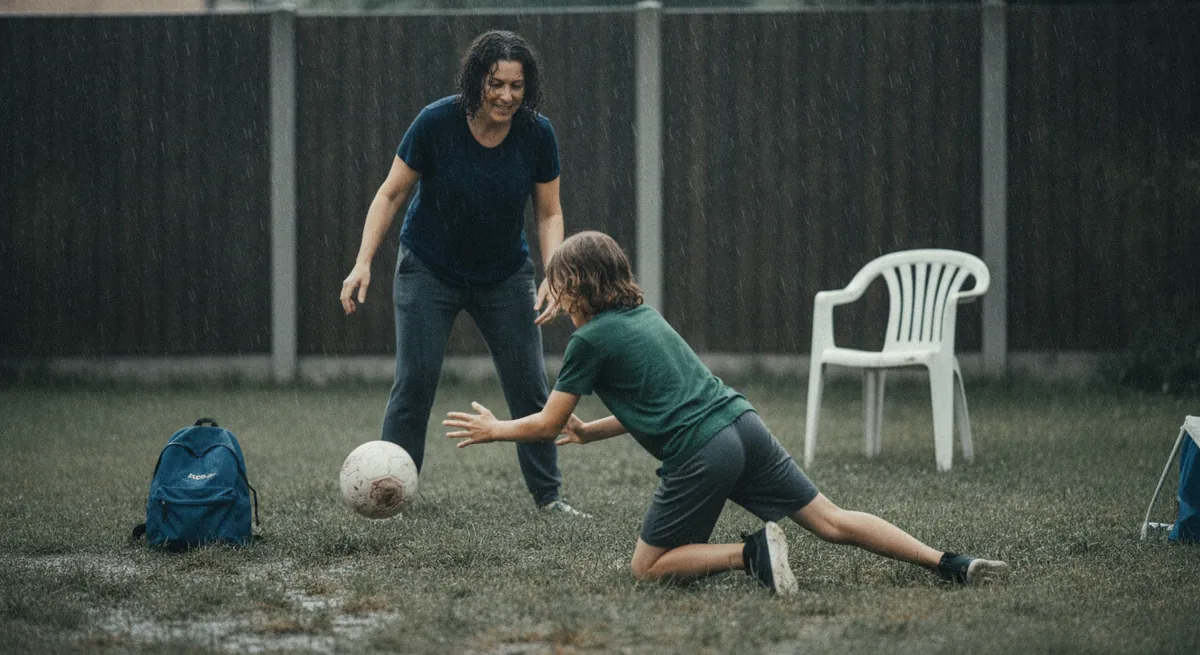 GoalkeepingSolo
GK Handling
Basic shot-stopping: set position, W-grip, collapse dive.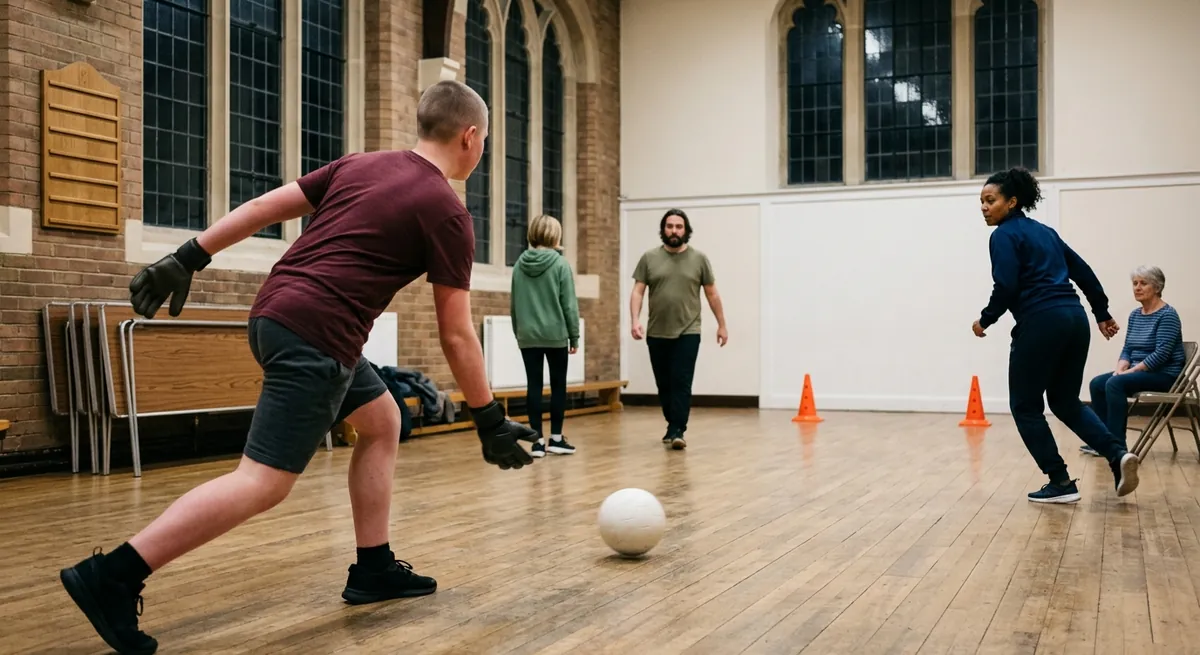 Goalkeeping
Catch and Throw in Four
Catch a ball and throw it out to a teammate breaking wide inside four seconds: the futsal goalkeeper's job of turning a save into a counter-attack before the other team can recover.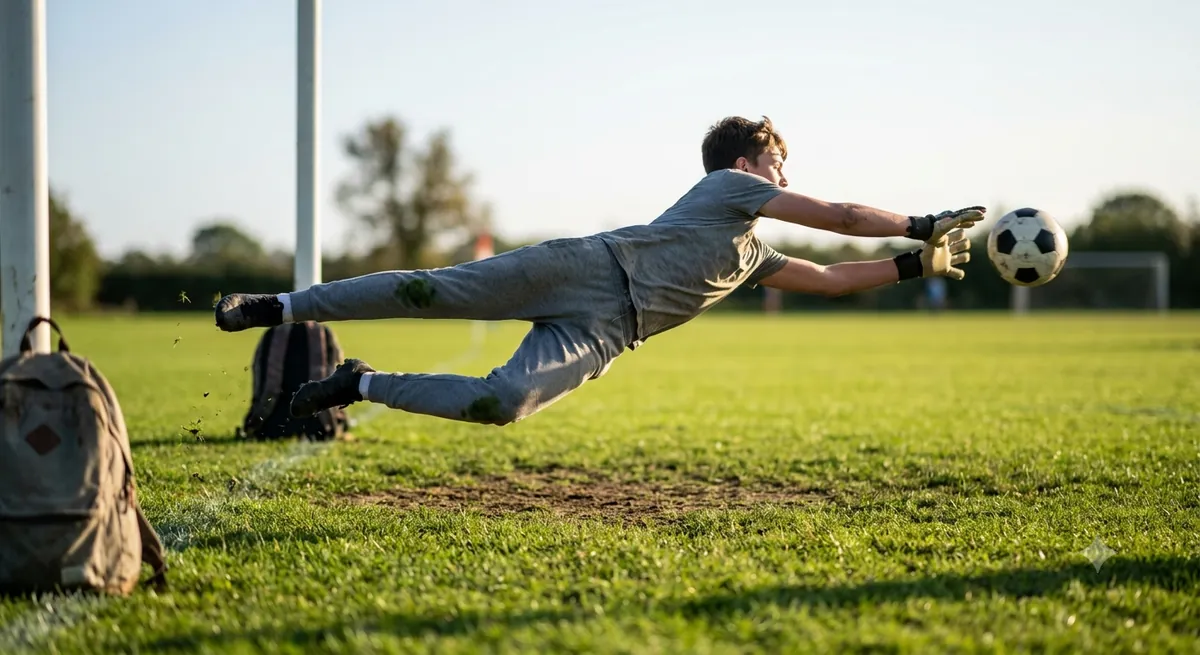 GoalkeepingSoloSmall space
GK Footwork: Shuffle and Set
Side-step across a goal-width line of cones, stop in a set position, and catch a dropped ball cleanly before shuffling on.GoalkeepingSoloGK Distribution: Roll and Throw
A keeper starts the attack with the hands: bowl the ball along the ground through a near gate, then throw overarm into a far target zone.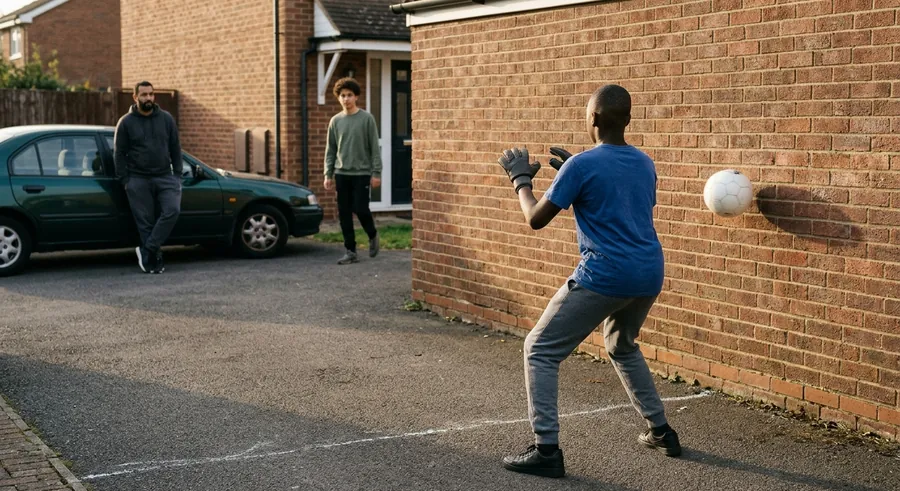 GoalkeepingSoloSmall space
GK Wall Reactions
Throw against a wall and catch the rebound from a set position, closer and quicker each round, so the hands react before the head has time to think.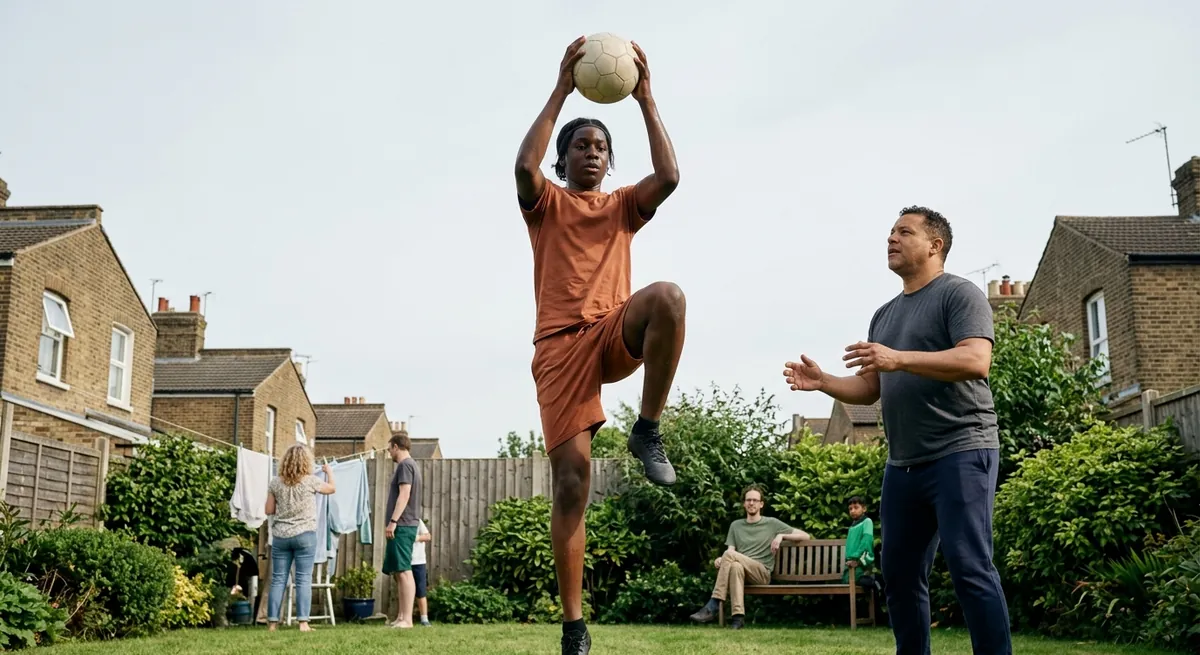 GoalkeepingSoloSmall space
GK High Ball: Catch at the Top
Catch the ball at the highest point you can reach, hands in a W above the forehead and one knee driven up, the way a keeper claims a cross.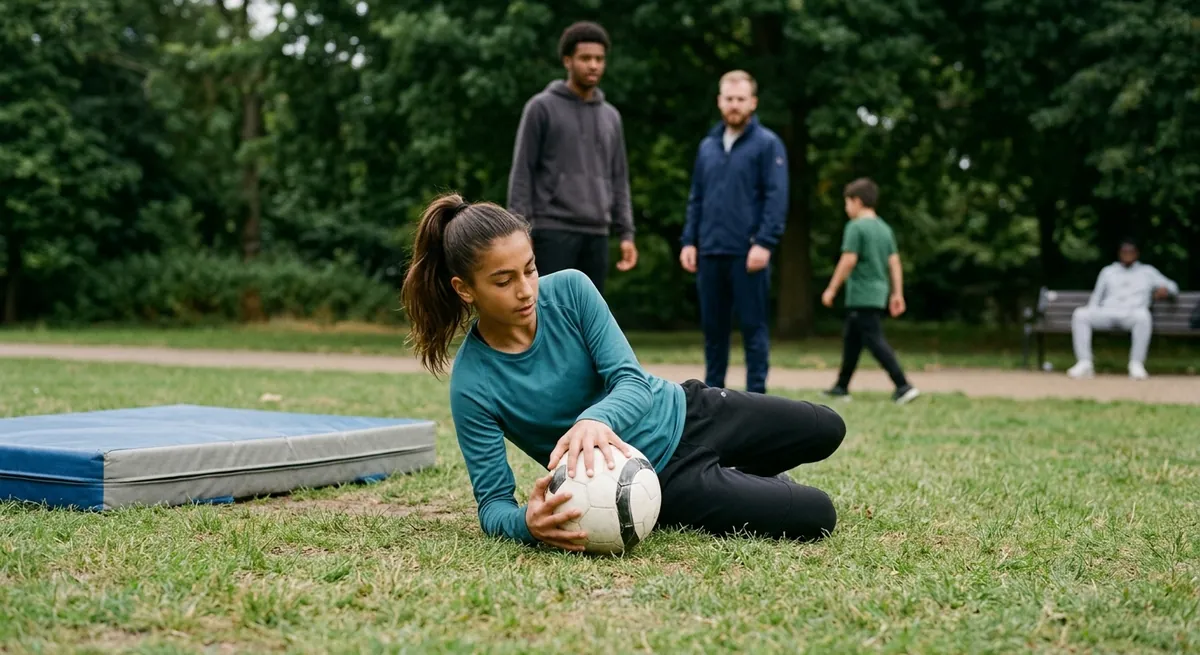 GoalkeepingSoloSmall space
GK Collapse Dive from the Knees
A keeper's first dive, learned from the knees up on soft ground: fall to the side, land on the hip and shoulder, never the elbow, and keep the ball.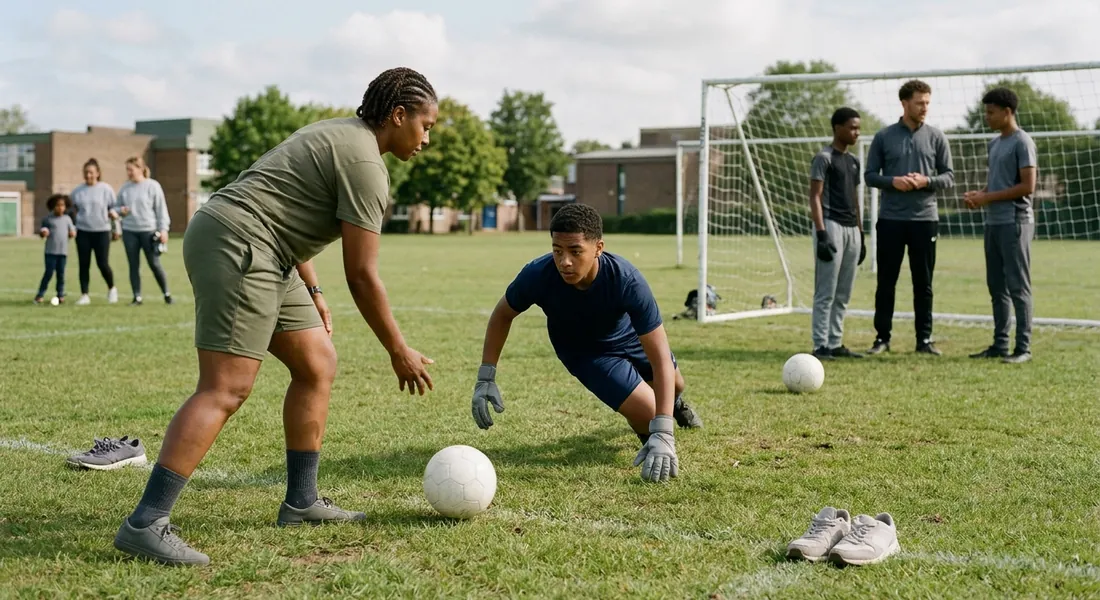 GoalkeepingSoloSmall space
GK Save and Reset
Make a low save, get up fast and get set again for the second ball, because a rebound is where most goals against a keeper come from.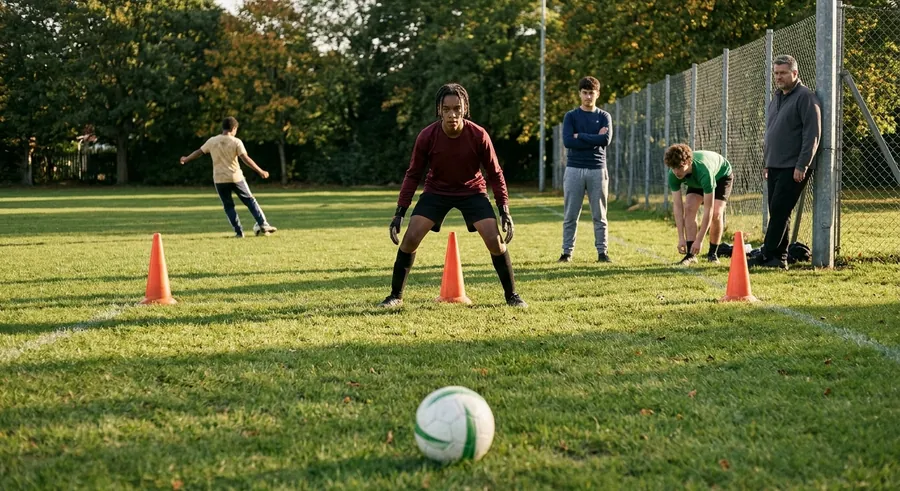 GoalkeepingSolo
GK Angles: Stand on the Line
Where to stand: on the line from the ball to the middle of the goal, a step off the goal line, so the shooter sees as little goal as possible. Learned with cones and a ball moved round the box.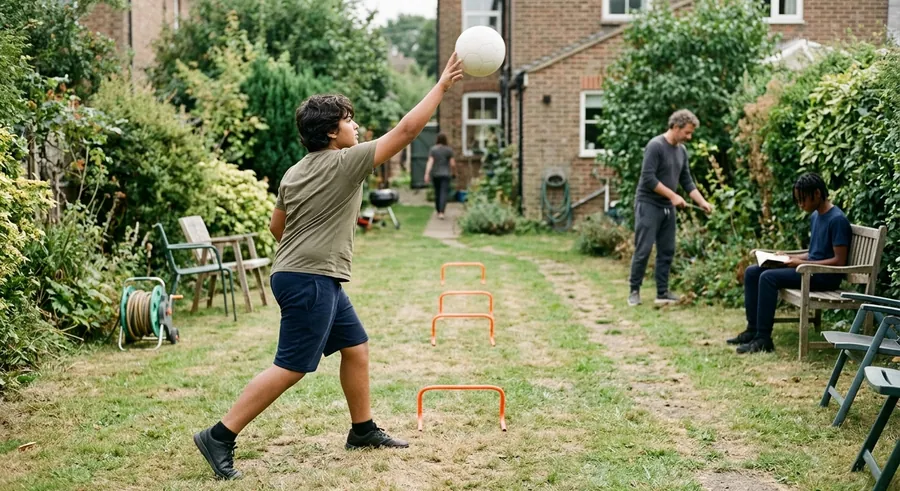 GoalkeepingSolo
GK Throws to Targets
Start the attack with the hands: a bowled roll along the ground and an overarm throw, each through a cone gate at a distance, so a save becomes a pass.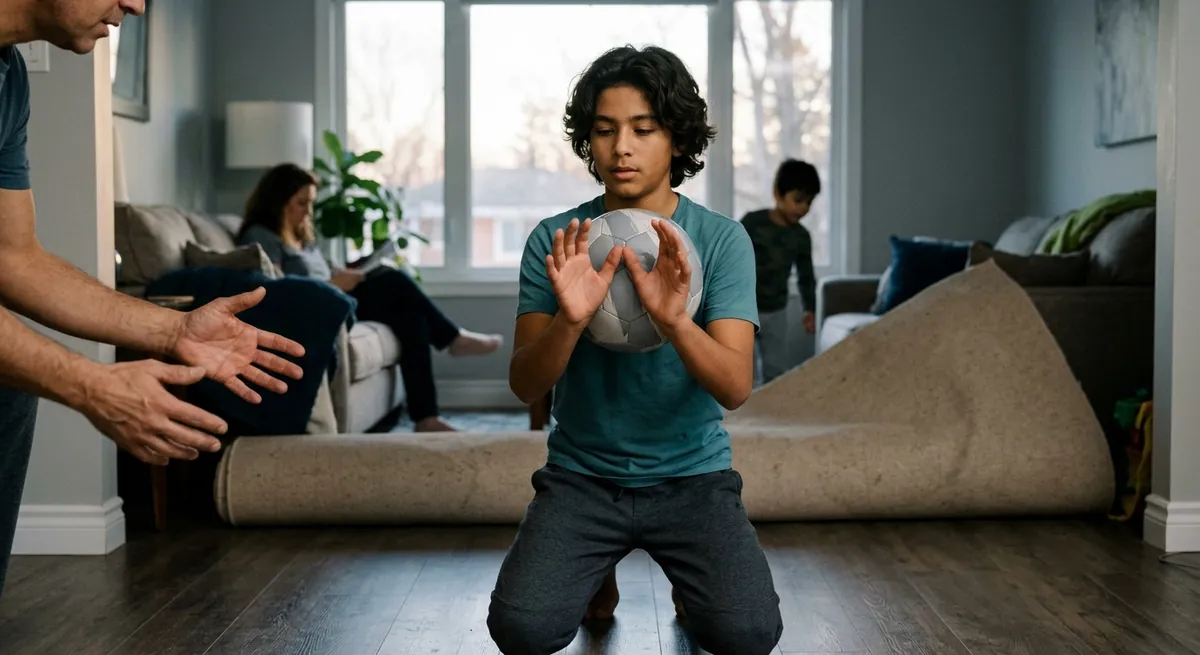 GoalkeepingSoloSmall space
GK Hands: Low Catches
Handling with no dive and no ceiling needed: catches seated, kneeling and in a crouch, the W-shaped hands and the scoop a keeper's whole game rests on.Speed and agility
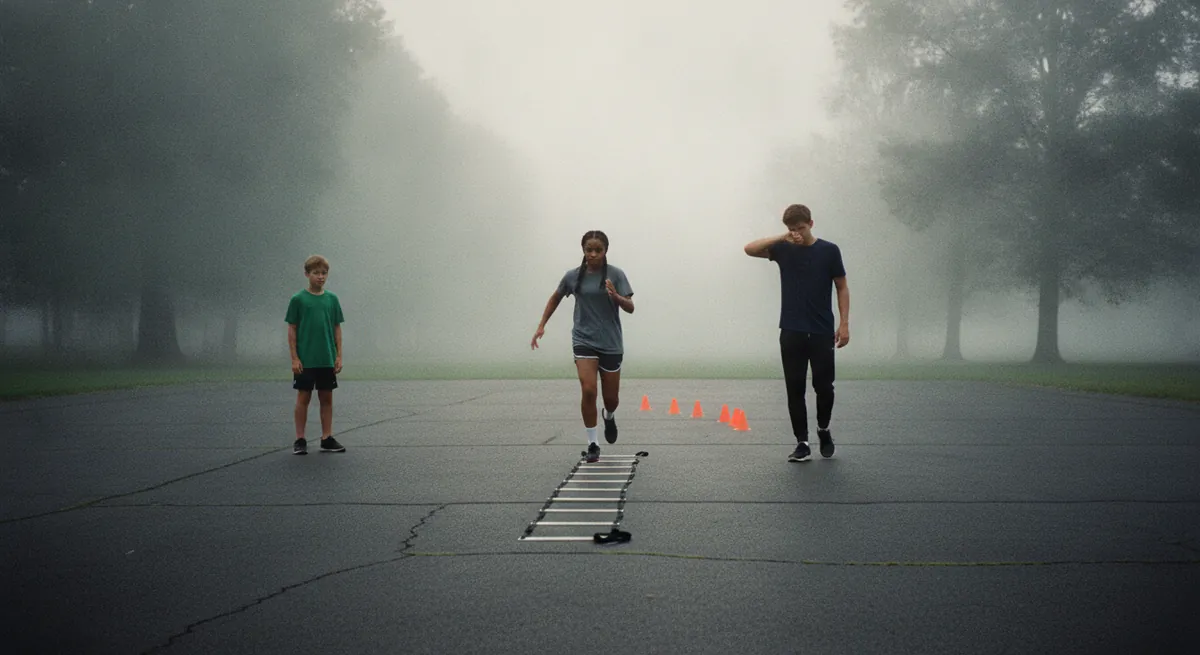
Footwork, acceleration and changes of pace.
 Speed and agilitySolo
Ladder & Cone Agility
Quick feet through a ladder (or cones as substitutes), followed by short sprints.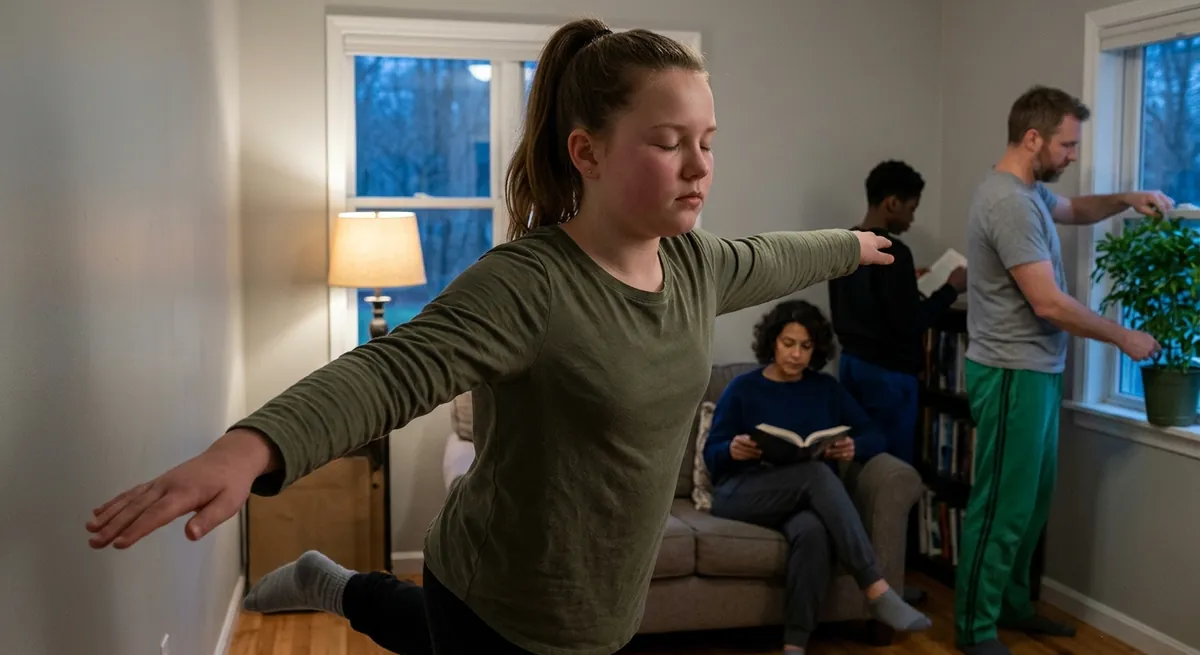 Speed and agilitySoloSmall space
Single-Leg Balance Circuit
Single-leg holds, reaches and airplane holds on a square of floor: the ankle strength a sharp first step is built on.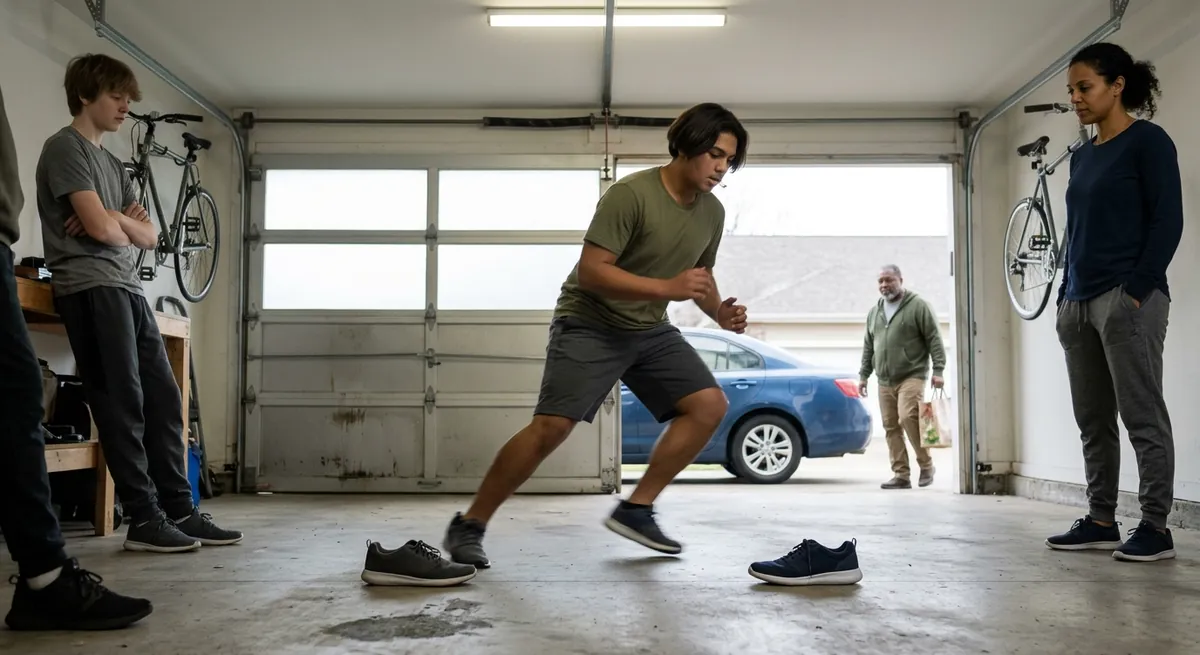 Speed and agilitySoloSmall space
Fast Feet & Lateral Shuffle
Quick feet on the spot, side shuffles across a metre and small forward-back hops: the footwork a player uses between every touch.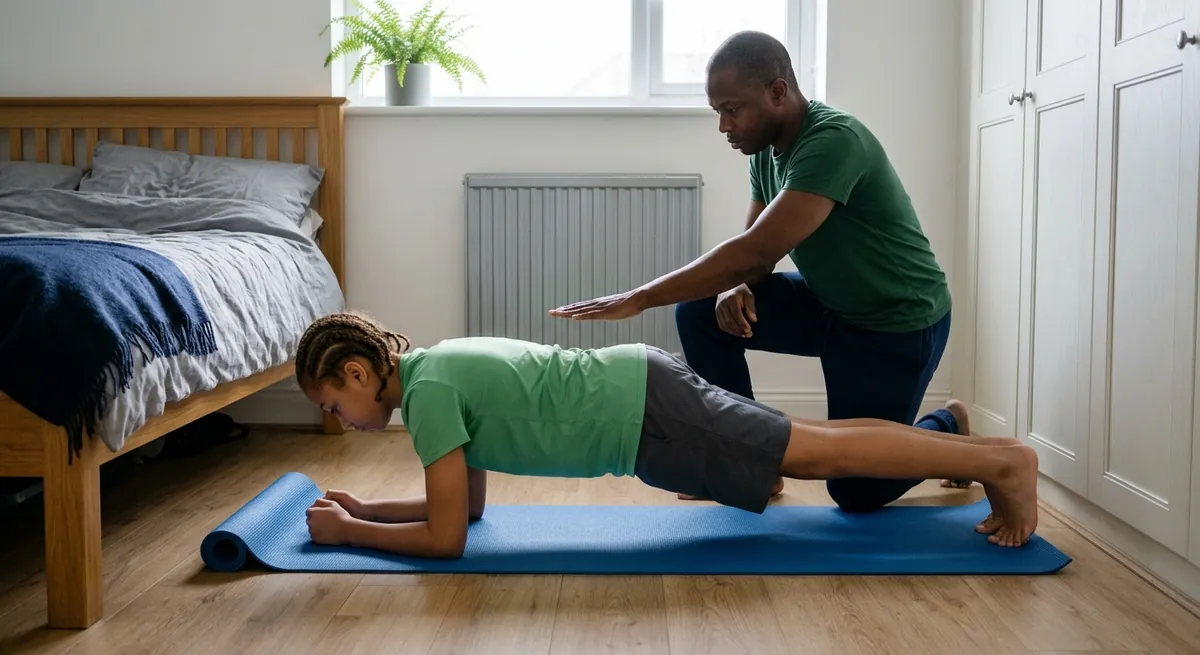 Speed and agilitySoloSmall space
Core for the Strike
Plank, side plank, dead bugs and glute bridges: the trunk a strike, a jump and a shoulder-to-shoulder duel all come from.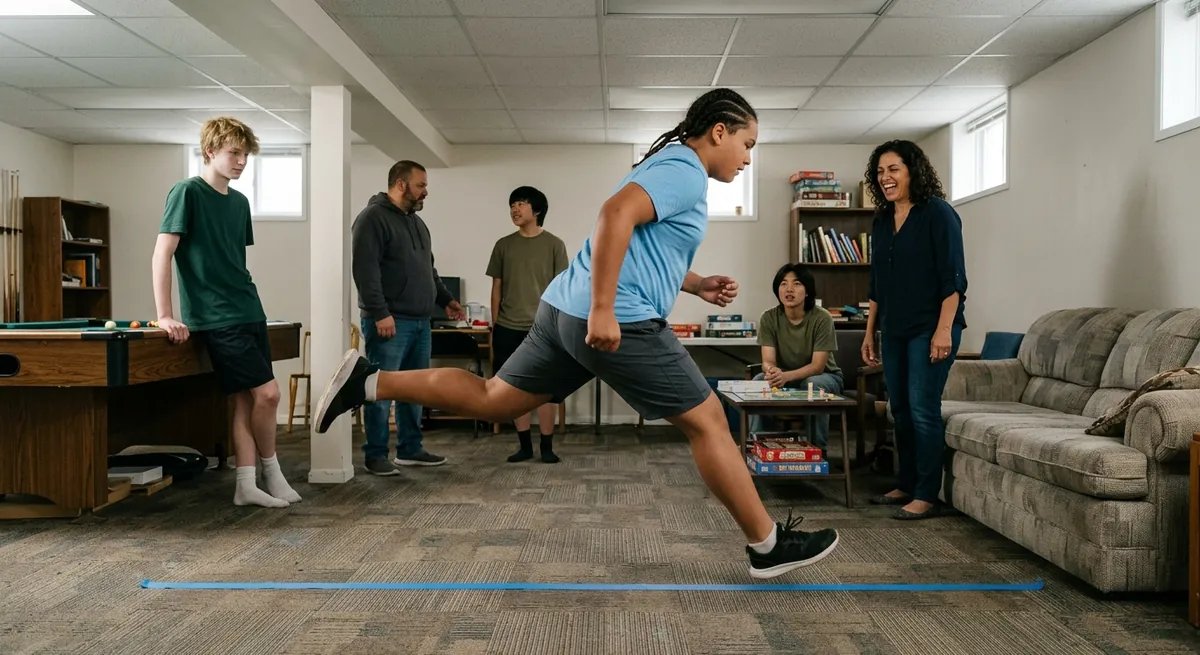 Speed and agilitySoloSmall space
Skater Bounds & Line Hops
Side-to-side bounds and quick two-footed hops over a line on the floor, landed soft: change-of-direction power that needs no ceiling height.Close the Door
Shut every lane of the day's attack. One a day, two levels, a few minutes, for the decisions the position makes before the ball arrives.
Greats who played it
From the Legend of the Week: a sourced story from each career and the move they were known for, with the drill that trains it.
Other positions
Train as a goalkeeper, week by week
Set your position in Spatrian and each week leads with the drills for it, read aloud by the Audio Coach and kept on your own training record, which your coach or personal trainer can read. The beta is opening to a small first group of players, coaches and families.