Outside-of-the-Foot Wall Pass
Passes off a wall with the outside of the foot, the pass that disguises where the ball is going, from four steps back in a garage or a basement.
Hear the coach on this drill
Every line the Audio Coach says in this drill, played back to back; the time beside each is when it comes in the 10-minute drill. No account needed.
Set-up
Four steps back from a bare wall, a garage door or a rebounder, on a hard floor or thin carpet so the ball comes back, with one ball and nothing breakable within reach of a pass that misses. The parent stands to the side, where they can see whether the hips turn.
What you need
- 1 soccer ball
- A wall or rebounder
The ground: 12 × 10 ft (about 4 × 3 m). One child can run it alone in a backyard. The space and equipment check lists every drill that fits the ground you have.
How to run it
- Set up. Four steps from a bare wall or a rebounder, with a ball and nothing breakable within reach. Hard floor or thin carpet.
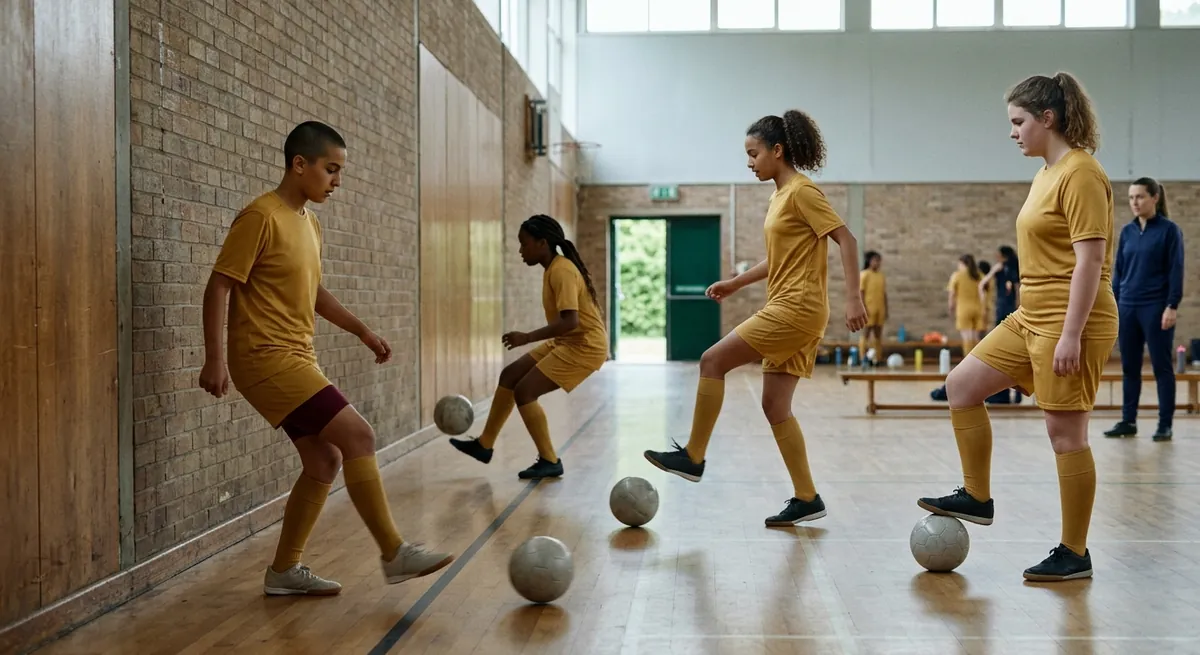
- Toe down. Point the toe down and in, lock the ankle, and strike the ball with the outside of the laces so it spins away from the foot.
- Soft first. Ten passes each foot at half pace, controlling the return with the inside of the other foot.
- Hips still. Ten more each foot without turning the body to face the wall. The disguise is the point.
- One touch. Thirty seconds of outside-foot passes off the wall, one touch to control and one to pass, alternating feet.
- Count it. One minute counting passes that come back to the feet. Write it down.
Coaching points
- Toe down and in, ankle locked, the ball struck with the outside of the laces
- Hips stay square to where they were facing: a turned body gives the pass away
- Short back-lift; this pass is a flick of the ankle, not a swing of the leg
What to watch: The body swinging round to face the wall before the pass, and the toe pointing up. Toe down, ankle locked, hips still.
Common mistakes
- The body swinging round to face the wall before the pass, which is the disguise given away
- The toe pointing up so the ball is scuffed rather than spun
- A long back-lift, turning a flick into a swing that misses
- A soft ankle, so the ball wobbles off the foot
- Only ever using the stronger foot
What good looks like
A good target: 20 outside-of-the-foot passes in 60 seconds returning to the feet, 10 with each foot.
Progressions and variations
Making it harder
- Level 1: Passes at half pace with a stop between each
- Level 2: The return controlled and the next pass played without a stop
- Level 3: Hips still through every pass, checked by a parent at the side
- Level 4: One-touch returns, alternating feet
- Level 5: Six steps from the wall at the same accuracy
- Level 6: Twenty-five returns in a minute, half with each foot
Alone, with a sibling, or in a group
- Solo: four steps from the wall on a phone timer, chasing returns in a minute.
- Sibling: side by side on the same wall, alternating passes so each controls the other's rebound.
- Co-op: pairs sharing a wall section, one passing and one counting, swapping each minute.
Adjusting it by age
- U14: Three steps from the wall, half pace, and the toe-down shape checked before any speed. Celebrate the spin on the ball before the count.
- U18: Further back, one touch, hips square the whole minute, and follow it with the half-turn so the disguised pass is played after a turn.
For the parent running it
- Stand to the side and watch the hips. An outside-of-the-foot pass is played without turning the body toward the target: that is the whole disguise.
Safety
- A bare wall or a garage door, never a window wall or a door with glass
- A hard floor or thin carpet; the ball does not return off deep carpet
More on training safely at home: Safety at Home.
Related drills
 PassingSolo
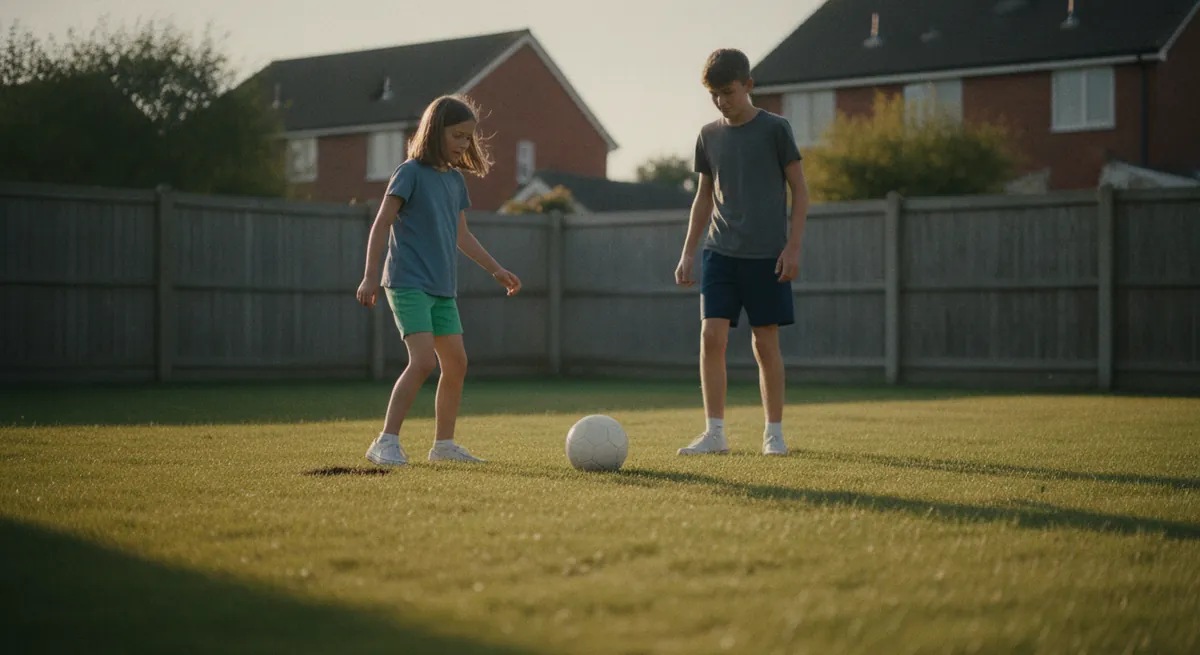
Wall Passing (Solo) / Partner Passing
Stand 5-8m apart. Pass the ball back and forth using the inside of the foot.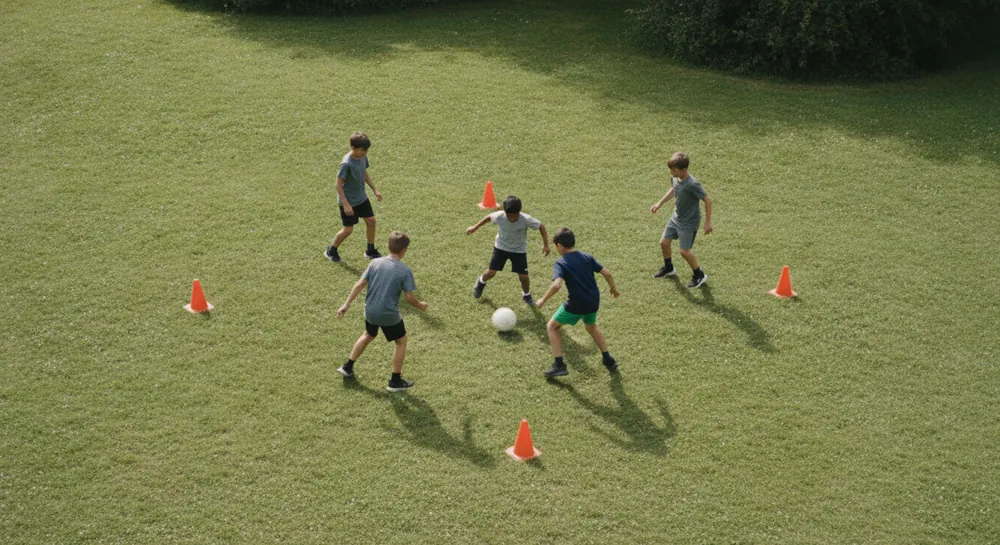 Passing
Rondo 3v1
Three players keep possession against one defender in small grid.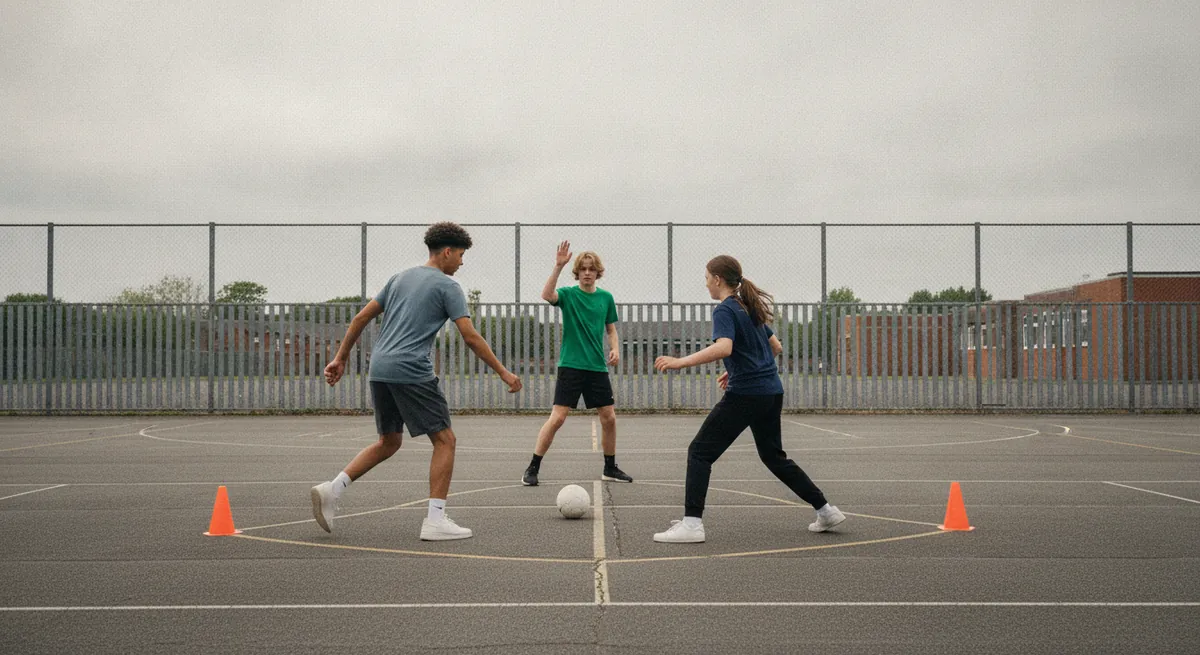 Passing
Triangle Passing
Three players form triangle, pass and follow or pass and move. Passing
Two-Grid Transition Rondo
Keep the ball in one grid, then break into the next one the moment it opens up.Run it with the Audio Coach
In Spatrian the Audio Coach talks your player through this drill while they play it, and each run goes on their own training record, which their coach or personal trainer can read and, for a homeschool family, counts as PE time. The beta is opening to a small first group of players and families.